
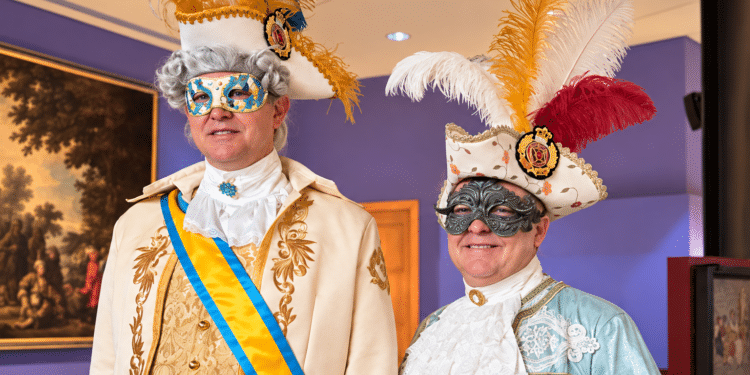
Gold masks, feathered hats, and embroidered coats filled the Embassy of Italy for a Venetian Ball that paired a masquerade with Italian music, wine, and desserts. Guests in tuxedos and gowns mingled with others wearing elaborate period costumes, some with lace cuffs, capes, and richly decorated headdresses.
The invitation drew on the art and history of Rome, Florence, and Venice. Venice supplied the masquerade theme, while the advertised entertainment included ballroom dancing, an opera presentation, and a mask contest.
Inside the Embassy on Whitehaven Street NW, the costumes stood against paintings, sculpture, glass, and contemporary architectural lines. One guest wore a dark cape and an expansive blue hat above a decorated mask. Two others posed in pale costumes, one accented with gold and a bright sash, the other with embroidery and feathers. A gold mask trimmed with lace and pearls accompanied a vivid pink gown.
Some guests adopted the historical theme in full. Others chose a simple mask with formal dress. Photographs captured both approaches, from carefully arranged poses to laughter between friends.
Prosecco and Italian wine accompanied conversations around the room. Guests paused to examine one another’s costumes and ask about their masks. The detail rewarded a closer look: the placement of a feather, the embroidery on a coat, or the lace around a mask changed the appearance of an entire outfit.
Young guests in formal dress posed together, while members of the event team welcomed visitors and helped them find their way through the activities. For Elizabeth, one of the guests, the ball was also a chance to reconnect with people she knew from other diplomatic events. Her partner, David, wore a gold Venetian mask. They stopped for photographs, and she greeted familiar young organizers, one of whom invited her to dance.

Among the conversations was an account from a State Department diplomat who had lived in Italy for years. The diplomat described choosing local Italian schools for the children rather than international schools and shared a Venetian mask. The account added a family’s experience of Italian life to an occasion largely devoted to its music, dress, and food.
The event announcement listed a ballroom demonstration and a short lesson, along with an opera presentation by two singers. It also advertised a DJ offering retro, swing, and contemporary music. The advertised schedule accommodated guests interested in listening, watching, or dancing.
The advertised dessert menu included cannoli, cassata, tiramisu, limoncello cookies, individual ricotta cheesecakes with almonds, berries with zabaglione sauce, and Venetian fritters. The selection extended the Italian theme to the table, with familiar desserts alongside dishes some guests might encounter for the first time.
The announcement also included a mask contest with prizes for a male and female winner. Across the room, guests had already supplied plenty to examine, from understated gold masks worn with black tuxedos to elaborate combinations of hats, capes, and period clothing.
There was a charitable component as well. According to the event information, a portion of each ticket sale would benefit the American Cancer Society in memory of a former staff member identified in the announcement as belonging to TTD.
The photographs preserve much of the ball’s character: embroidered sleeves, feathers above a mask, friends posing together, and couples pausing between dances. Against the Embassy’s modern interior, the Venetian costumes gave each portrait its own detail.
